
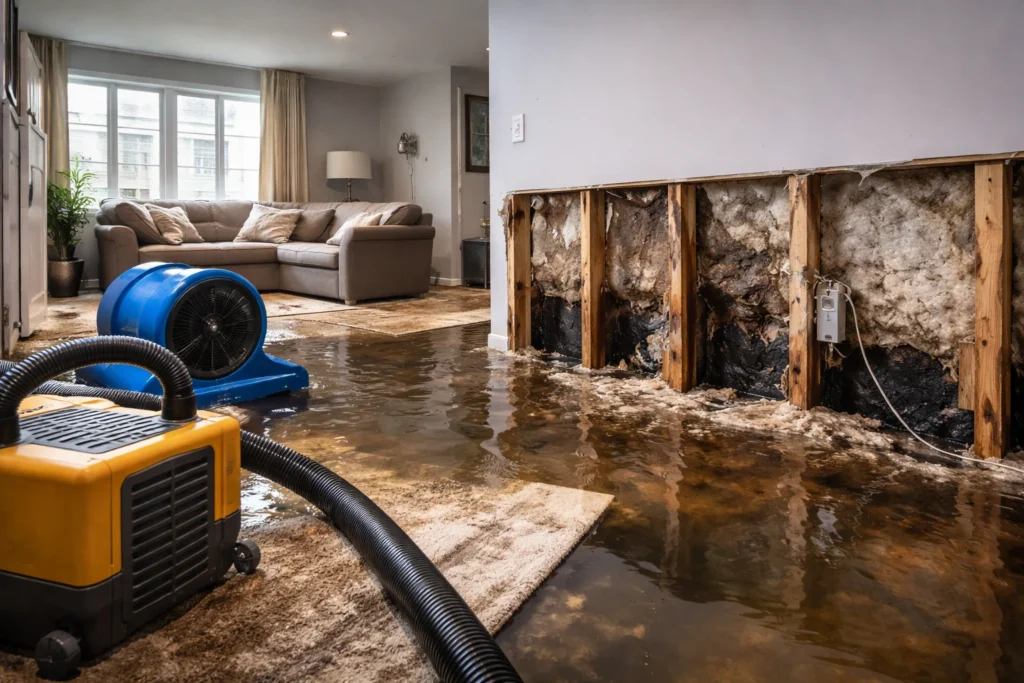
Water spreads fast. It seeps under flooring, creeps behind drywall, and soaks insulation before you even realize what’s happening. And when it does, hiring a public adjuster for water damage can mean the difference between a properly restored home and a patchwork repair that costs you later.
Water damage is one of the most common property insurance claims in Texas. It’s also one of the most disputed. Policies are dense. Exclusions are buried in fine print. And insurance inspections can move quickly. Too quickly. If the scope of damage is underestimated at the beginning, you may never recover the full amount needed to rebuild correctly.
Let’s break this down clearly. What does a public adjuster for water damage actually do? When should you hire one? And how can they protect your financial outcome?
Understanding Water Damage in Insurance Policies
Not all water damage is treated equally by insurance carriers. That’s the first hard truth.
What Is Typically Covered
Most homeowner policies cover sudden and accidental water damage, including:
- Burst pipes
- Appliance hose failures (washing machines, dishwashers)
- Sudden roof leaks from storms
- Overflowing toilets or sinks
- HVAC drain line backups
If the event is abrupt and unexpected, there’s usually coverage.
What Is Usually Not Covered
Here’s where homeowners get surprised:
- Flood damage from rising water (requires a separate flood policy)
- Long-term leaks
- Maintenance neglect
- Foundation seepage
- Sewer backup (unless endorsed)
The distinction between “sudden” and “gradual” is where disputes begin. Insurance companies may argue that damage developed over time. You may know it didn’t. That gap matters.
This is exactly where a public adjuster for water damage becomes critical. They understand how to document timeline, origin, and scope.
Why Water Damage Claims Get Underpaid or Denied
Here’s something most homeowners don’t realize: the first inspection often determines the ceiling of your claim.
If hidden moisture isn’t identified early, the settlement may not include:
- Subfloor replacement
- Structural drying
- Mold remediation
- Electrical repairs
- Insulation removal
And once repairs begin, supplements can become difficult.
Below is a breakdown of common issues:
| Common Issue | How It Impacts Your Claim | Risk to Homeowner |
| Incomplete moisture detection | Hidden damage not included | Future structural issues |
| Depreciation disputes | Lower payout | Out-of-pocket expenses |
| Mold exclusions | Limited remediation funds | Health risks & repair delays |
| Scope disagreements | Partial repairs approved | Inconsistent restoration |
| Technical filing errors | Claim denial | Restarting process |
A public adjuster for water damage approaches the claim differently. They document thoroughly. They assume nothing. And they build the file like it may be challenged.
Because it often is.
What Does a Public Adjuster for Water Damage Actually Do?
Let’s get practical.
A public adjuster works for you. Not the insurance company. Not a contractor. You.
1. Detailed Damage Inspection
This isn’t a five-minute walkthrough. It’s systematic.
They may use:
- Moisture meters
- Thermal imaging cameras
- Infrared scanning
- Structural probing
They’re looking beyond what’s visible. Water travels. It follows framing. It pools under cabinets. And it spreads beneath tile.
Miss that, and you miss money.
2. Documentation and Evidence Gathering
Insurance claims are evidence-driven. No documentation, no payout.
A public adjuster for water damage will:
- Photograph every affected area
- Prepare a detailed room-by-room damage report
- Coordinate contractor estimates
- Create inventory lists for damaged contents
- Review remediation invoices
Every line item must connect to policy coverage. That’s strategy, not paperwork.
3. Policy Analysis
Policies are contracts. They include:
- Coverage limits
- Sub-limits
- Endorsements
- Mold caps
- Code upgrade provisions
An experienced public adjuster reads the policy before preparing the demand. They align the claim with what the contract actually provides.
4. Negotiation
Insurance carriers negotiate. That’s not controversial. It’s procedural.
A public adjuster for water damage challenges:
- Low repair estimates
- Improper depreciation
- Incomplete scope
- Partial denials
- Coverage misinterpretation
This is where professional representation matters most.
When Should You Hire a Public Adjuster for Water Damage?
Timing matters.
Here are scenarios where representation makes sense:
After a Major Loss
If multiple rooms are affected, walls are removed, or flooring is saturated, the claim value escalates quickly.
Complex claim = higher risk.
When Mold Is Present
Mold can begin forming within 24–48 hours. Insurance policies often cap mold coverage. Documentation must be precise. Testing must be defensible.
When the Offer Feels Low
Trust your instincts. If the settlement won’t restore your home properly, pause.
After a Denial
Claims can be reopened. Appeals can be filed. Appraisal clauses may apply.
When You Don’t Have Time
Managing a water damage claim is a second job. Inspections. Phone calls. Contractor coordination. Documentation.
If you’re juggling work and family, a public adjuster for water damage absorbs that workload.
Is Hiring a Public Adjuster Worth It?
Let’s talk numbers.
Public adjusters typically work on contingency. That means:
- No upfront payment
- Percentage of final settlement (often 5–15%)
Here’s a simplified example:
| Scenario | Amount |
| Initial Insurance Offer | $45,000 |
| Adjusted Settlement After Representation | $78,000 |
| Adjuster Fee (10%) | $7,800 |
| Net to Homeowner | $70,200 |
Even after fees, the homeowner receives significantly more.
Every case is different. But the principle holds: complete documentation increases leverage.
And leverage increases outcomes.
Water Damage and Mold: The Hidden Multiplier
Mold complicates everything.
Insurance carriers often:
- Limit mold coverage
- Require proof of sudden origin
- Dispute remediation scope
Improper drying leads to secondary damage. Secondary damage leads to disputes.
A public adjuster for water damage ensures:
- Moisture readings are recorded
- Drying logs are maintained
- Remediation reports are complete
- Air quality testing is documented
Without these records, claims shrink.
The Step-by-Step Process of Working with a Public Adjuster
Let’s walk through what to expect.
- Initial Consultation – Damage review and policy discussion
- Property Inspection – Comprehensive assessment
- Agreement Signing – Contingency terms outlined
- Claim Preparation – Full documentation package
- Submission & Negotiation – Carrier engagement
- Re-inspections – If needed
- Settlement Resolution – Final agreement
Clear. Structured. Strategic.
Choosing the Right Public Adjuster in Texas
Not all adjusters are equal.
Look for:
- Active Texas license
- Experience with water and mold claims
- Local knowledge of building codes
- Transparent fee agreement
- Strong communication
Ask direct questions:
- How many water damage claims have you handled?
- What’s your average timeline?
- How do you document hidden moisture?
- What percentage do you charge?
A reputable public adjuster for water damage won’t hesitate to answer.
Common Myths
Let’s clear a few up.
“Hiring one delays my claim.”
Not necessarily. Strong documentation can actually streamline negotiations.
“The insurance adjuster works for me.”
They are paid by the carrier.
“Only large claims need representation.”
Mid-sized claims are often underpaid because homeowners don’t push back.
“They’re too expensive.”
It depends on the outcome. Representation is an investment decision.
Special Considerations for Texas Homeowners
Texas weather is unpredictable. Freezes burst pipes. Storms damage roofs. HVAC systems work hard in heat.
The Texas Department of Insurance also enforces prompt payment laws. Carriers must meet timelines. Understanding those timelines creates leverage.
Additionally:
- Appraisal clauses may apply
- Code upgrades can increase scope
- Matching statutes affect materials
A local public adjuster for water damage understands these nuances.
Frequently Asked Questions
What percentage does a public adjuster charge?
Typically between 5–15% of the final settlement.
Can I hire one after filing my claim?
Yes. You can retain representation mid-process.
Can they help with denied claims?
Often, yes. Depending on circumstances and timing.
How long does the process take?
It varies. Complex claims take longer.
Will my insurer retaliate?
Insurance carriers are prohibited from retaliating against policyholders for seeking representation.
Do they handle mold claims?
Yes, especially when tied to sudden water damage.
What if I already accepted a settlement?
It may be difficult to reopen, but consult immediately.
Final Thoughts: Protecting Your Property and Your Settlement
Water damage doesn’t just affect drywall and flooring. It affects structure, air quality, resale value, and your peace of mind.
A public adjuster for water damage exists to level the playing field. To slow down the process when it moves too fast. To ensure no moisture pocket goes undocumented. And to push back when estimates fall short.
If your home has suffered water damage, the decision isn’t just about filing a claim. It’s about protecting your investment. It’s about ensuring repairs are done correctly the first time.
Representation isn’t for everyone. But when the loss is significant, when mold is present, or when the settlement feels insufficient, consulting a public adjuster for water damage can be one of the smartest financial decisions you make.
Water spreads quickly.
Your strategy should move just as fast.